• What Should You Actually Look for in a Whitening Cream Formula Before You Place an OEM Order?
    Jul 29, 2026
    What Should You Actually Look for in a Whitening Cream Formula Before You Place an OEM Order?

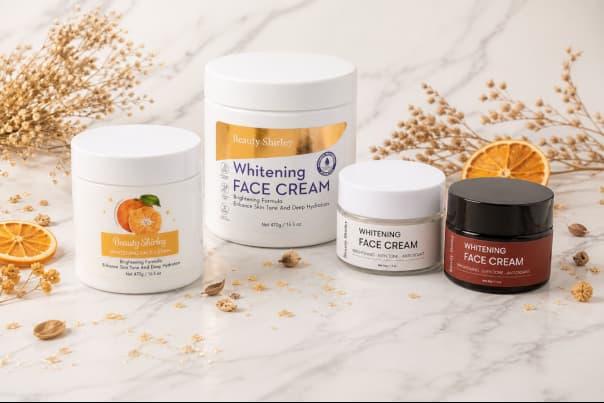
    How to Evaluate a Whitening Cream Formula: A Complete B2B Guide When a buyer asks about a whitening cream, one of the first things we look at is how many brightening mechanisms the formula actually covers. A product name can include "Vitamin C" or "Niacinamide" without explaining how those actives work together, whether the Vitamin C form is stable, or whether the formula addresses pigmentation at more than one point in the melanin production cycle. Those details matter more than the ingredient list alone. A useful formula discussion starts with the skin concern being addressed, not with the ingredient name on the label. Understand the Brightening Mechanism First Not all brightening actives do the same thing. Niacinamide reduces the transfer of melanin from melanocytes to keratinocytes — it addresses pigmentation after it has been produced. Alpha-Arbutin works earlier in the process by inhibiting tyrosinase activity, reducing how much melanin is synthesized in the first place. A stable Vitamin C ester such as 3-O-Ethyl Ascorbic Acid adds antioxidant support and a complementary inhibition pathway. When these actives are combined in a well-structured Alpha-Arbutin Niacinamide brightening cream, they address pigmentation at multiple stages rather than one. That changes what the product can credibly claim and how it performs over time. If you are comparing formulas with similar ingredient names, the useful question is not which active appears first on the list, but which mechanisms are actually covered and whether the concentrations support the intended claims. Match the Formula to Your Target Market's Regulatory Environment The same brightening active can have different regulatory status across markets. Hydroquinone, for example, is restricted or banned as a cosmetic ingredient in the EU, UK, and many ASEAN markets. Kojic Acid has concentration limits in certain jurisdictions. Before selecting a formula for international distribution, it is worth confirming that every active in the formula is compliant with the specific regulations of your destination market — not just generally accepted in skincare. As a whitening face cream OEM manufacturer with efficacy validation capabilities, we can support formula selection against the regulatory requirements of your target markets and provide the ingredient documentation needed for import compliance and retail buyer submissions. Consider the Packaging Format in Relation to the Formula A whitening cream formula that contains a Vitamin C ester has specific stability requirements. Vitamin C actives can degrade when exposed to light, air, and heat. A clear glass jar and an opaque white jar create different stability conditions for the same formula over its shelf life. The 50ml glass jar format suits boutique retail and premium positioning; the 470g or 750g opaque white jar suits professional in-clinic or economy bulk distribution. Each format implies a different storage environment and a different expected use period for the product. If the pack format is still open when the formula discussion begins, it is more efficient to settle the product, channel, and distribution context first. The packaging choice follows more logically once those are clear. Decide What Claims the Product Needs to Support A private label skin brightening wholesale product intended for EU distribution may need different claim substantiation than the same product positioned for Southeast Asian retail. Some markets accept cosmetic brightening claims based on the recognized action of listed ingredients. Others require efficacy test data — human use studies, in-vitro results, or clinical assessments — before specific before-and-after or percentage-improvement claims can be made. Our efficacy validation system supports international market claims registration and testing documentation where required. Before artwork is finalized and claims are set on the label, it is worth identifying exactly which claims are intended, which market they are going into, and what substantiation will be needed. Settling that before production avoids label revisions and delays after samples are approved. Start the Formula Conversation with What You Already Know You do not need every detail finalized before beginning the discussion. Share the target skin concern, the distribution channel, the destination market, and any packaging references you already have. If the formula route is still open, we can review stock formulas and adjusted or custom development options together. If a formula is already selected, we can focus the discussion on regulatory alignment, efficacy documentation, and packaging. If you have a product brief, formula references, or target market in mind, send them to us. We can start with what is already decided and work through what remains open.

    Read More

  • What Should You Look for in a Hair Loss Treatment Formula Before Sourcing from an OEM Manufacturer?
    Jul 29, 2026
    What Should You Look for in a Hair Loss Treatment Formula Before Sourcing from an OEM Manufacturer?

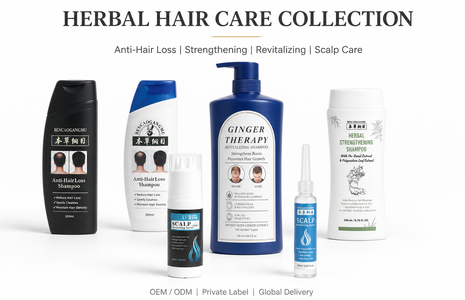
    A B2B Guide to Formulating Effective Hair Loss Treatments When a buyer sends us a brief for a hair loss treatment product, one of the first things we look at is what the formula is actually targeting. Hair thinning and hair loss have multiple underlying causes — hormonal factors, scalp circulation, follicle miniaturization, oxidative stress, and scalp microbiome imbalance among them. A formula that only addresses one of these will deliver limited results for a significant portion of the consumers who use it. A useful formula discussion therefore starts with which causes the product intends to address, not with the ingredient names alone. Understand the Mechanism Before Selecting Ingredients Not all anti-hair-loss actives work the same way. DHT (dihydrotestosterone) is one of the most well-documented drivers of androgenetic hair loss — the most common form of hair thinning in both men and women. DHT binds to receptors in hair follicles and progressively miniaturizes them, shortening the active growth phase until the follicle stops producing visible hair. Actives that inhibit DHT activity at the follicle level — such as Saw Palmetto Extract and certain peptide complexes — address hair loss at this hormonal root cause. Scalp circulation is a separate but equally important dimension. Hair follicles are metabolically active structures that require consistent nutrient and oxygen delivery. Actives such as Niacinamide and certain botanical vasodilators—like those effectively utilized in a Ginger Therapy Revitalizing Hair Growth Shampoo—support scalp microcirculation, improving the local environment in which follicles operate. For an anti hair loss treatment OEM manufacturer, combining a DHT-inhibiting active with a circulation-supporting active creates a formula that addresses two independent causes simultaneously — a more defensible efficacy position than a single-mechanism approach. If the buyer's target consumer is primarily experiencing stress-related or postpartum hair loss rather than androgenetic thinning, the formula priorities shift: follicle-strengthening peptides, antioxidant actives, and scalp barrier support become more relevant than DHT inhibition. Identifying the primary cause before selecting actives avoids building a formula that is well-formulated for the wrong consumer. Decide Whether the Product Is a Leave-On or Rinse-Off Format Format affects which actives can realistically deliver results. A rinse-off shampoo has a short contact time with the scalp — typically one to three minutes. Actives that require sustained contact with hair follicles to exert their effects are better suited to a leave-on serum, tonic, or scalp treatment format. For a scalp health serum private label wholesale project, the leave-on format allows a more concentrated active delivery and a longer period of follicle interaction per application. This does not mean a shampoo cannot be an effective part of a hair loss routine. A well-formulated anti-hair-loss shampoo can remove scalp buildup, DHT metabolites, and excess sebum that create a poor follicle environment — preparing the scalp for the leave-on treatment that follows. When the brief covers a multi-product range rather than a single SKU, the rinse-off and leave-on formats serve different functional roles and can be planned accordingly. If the format is still open at the start of the discussion, clarifying the intended use frequency, application method, and whether the product is a standalone or part of a routine helps narrow the format before active selection begins. Consider the Scalp Condition the Formula Needs to Address Hair loss does not always occur on a healthy scalp. Many consumers experiencing hair thinning also present with one or more scalp concerns: excess sebum production, scalp sensitivity, dandruff, or a compromised skin barrier from prior product use. A formula that addresses hair loss without considering the scalp condition it will be applied to may aggravate an existing concern or simply underperform because the follicle environment is not receptive. For DHT blocking hair growth formula supplier projects where the target consumer has an oily or congested scalp, incorporating a sebum-regulating active — such as Zinc PCA — alongside the hair loss actives addresses both the scalp environment and the follicle health simultaneously. For sensitive or reactive scalps, soothing actives such as Bisabolol or Panthenol reduce the risk of irritation from stronger actives and improve daily-use compliance. The scalp condition profile of the target consumer is therefore a useful input for the formula brief — not an afterthought once the hair loss actives have already been selected. Match the Claimed Efficacy to Available Substantiation Hair growth and hair loss claims are among the more regulated areas of cosmetic product marketing. In most markets, claims such as "regrows hair" or "stops hair loss" require clinical substantiation — and in some markets, such as the United States, they may cross into drug-product territory that cosmetic regulations do not cover. Claims that describe a cosmetic action — such as "supports the appearance of fuller hair", "helps reduce hair fall due to breakage", or "promotes a healthy scalp environment" — are generally more defensible in a cosmetic regulatory framework. Before the formula is finalized and claims are set on the label, identifying which claims are intended, which market they are going into, and what level of substantiation will be required avoids the most common compliance problem in the hair loss category: a product that performs well but carries claims it cannot legally support in its destination market. Our efficacy verification system supports hair loss product development with appropriate testing documentation for international market claims registration where required. Plan the Delivery System for the Target Application Format How an active is delivered to the scalp affects how much of it reaches the follicle. A conventional water-based tonic may carry actives to the scalp surface but deliver limited penetration into the follicular channel where growth regulation occurs. Encapsulation technology, liposomal delivery systems, and certain carrier solvents — such as Butylene Glycol — can improve the penetration efficiency of key actives, allowing effective delivery at lower total concentrations. For products intended for daily use, the delivery system also affects the sensory profile: a tonic that leaves residue, creates buildup, or feels uncomfortable on the scalp will not achieve the application frequency that the formula's efficacy depends on. A leave-on scalp serum that absorbs cleanly and does not affect styling is significantly more likely to be used consistently. Settling the delivery format and sensory brief before finalizing the active complex allows the formulation to optimize both efficacy and compliance from the start. Begin with the Consumer and the Cause You do not need every ingredient decided before the first conversation. Share the target consumer profile — age, gender, primary hair loss cause, scalp condition — alongside the intended format, channel, and destination market. If the formula direction is still open, we can review active combinations that address the identified causes within the regulatory constraints of the target market. If a formula is already selected, we can focus on delivery system optimization, efficacy documentation, and packaging. If you have a hair loss product brief, a target consumer profile, or a formula already in development, send us the details. We can work through the active selection, scalp condition fit, and claim substantiation from there.

    Read More
leave a message
If you are interested in our products and want to know more details,please leave a message here,we will reply you as soon as we can.